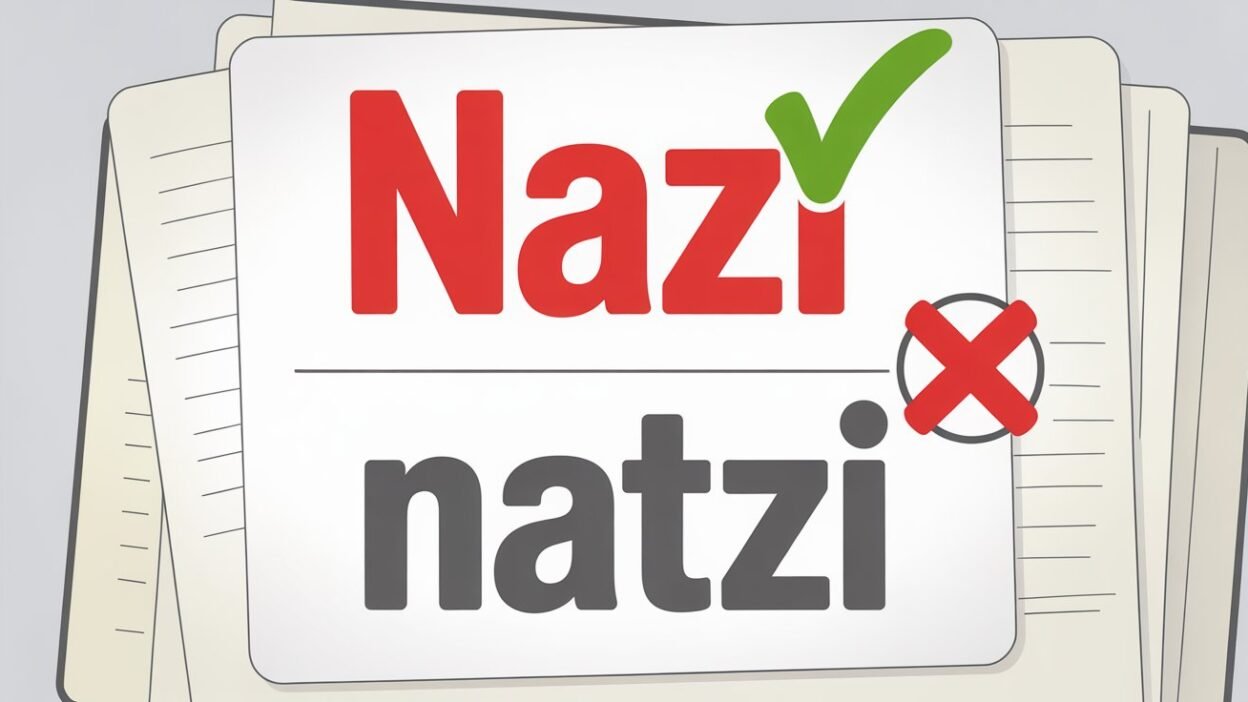
Many people get confused between “natzi” and “nazi.” At first glance, they look very similar. Some people think they mean the same thing, while others are unsure which one is correct.
This confusion usually happens because:
- The words look almost identical
- People see them online or in comments
- One is often a misspelling of the other
In this article, you will learn the real meaning, the difference, and when to use each word in very simple English.
Quick Answer
Here is the short and clear answer:
- Nazi → The correct word
- Refers to a member of a German political group from history
- Connected to World War II
- Natzi → Incorrect spelling
- Not a real word in standard English
- Usually a typing mistake or misspelling of “Nazi”
Simple Origin and Background
What is “Nazi”?
The word “Nazi” comes from Germany. It is a short form of a long name:
- National Socialist German Workers’ Party
This group was active in the early 1900s and became very powerful during World War II.
People use the word “Nazi” to talk about:
- Members of that group
- Their beliefs and actions in history
What about “Natzi”?
The word “natzi” does not come from history or any real group.
It is simply:
- A wrong spelling of “Nazi”
- Often written by mistake when typing quickly
- Sometimes used online without knowing it is incorrect
Clear Explanation of the Difference
Let’s make it very simple:
Nazi
- A real and correct word
- Has a historical meaning
- Used in books, news, and education
Natzi
- Not a real word
- Has no official meaning
- Just a spelling error
👉 Think of it like this:
- “Nazi” = correct and meaningful
- “Natzi” = mistake, like typing “recieve” instead of “receive”
Comparison Table
| Feature | Nazi | Natzi |
| Spelling | Correct | Incorrect |
| Meaning | Historical and real | No real meaning |
| Usage | Books, news, education | Informal typing mistakes |
| Accepted English | Yes | No |
| Origin | German political history | None |
Which One to Use and When
Use “Nazi” when:
- You are talking about history
- Writing a school assignment
- Reading or writing news content
- Discussing World War II
Do NOT use “natzi”:
- In formal writing
- In school work
- In professional communication
If you accidentally type “natzi,” always correct it to “nazi.”
Common Mistakes People Make
Here are some common errors:
1. Thinking both words are correct
Some people believe “natzi” is just another version.
👉 This is not true.
2. Using “natzi” in serious writing
This can make your writing look careless or incorrect.
3. Not checking spelling
Many mistakes happen because people type fast and do not check.
4. Copying from social media
Sometimes people copy wrong spellings they see online.
👉 Tip: Always double-check important words, especially in learning.
Everyday Real-Life Examples
1. In Emails
❌ Incorrect:
He was studying about natzi history.
✅ Correct:
He was studying about Nazi history.
2. In News Reading
You will always see:
- “Nazi Germany”
- “Nazi regime”
You will never see “natzi” in real news.
3. On Social Media
Sometimes you may see:
- “natzi” in comments
👉 This is usually:
- A typo
- Or someone who doesn’t know the correct spelling
4. In School Work
❌ Wrong:
The natzi party was powerful.
✅ Right:
The Nazi party was powerful.
5. In Daily Conversations
When speaking, both sound similar, but when writing:
- Only “Nazi” is correct
Learning Section for Students and Beginners
Here are simple tips to remember:
Easy Memory Trick
Think:
- Nazi = No extra “t”
👉 The correct word has 4 letters only
Practice Tip
Write this sentence 3 times:
The Nazi party was part of history.
This helps you remember the correct spelling.
Spelling Rule
- Avoid adding extra letters
- Keep it simple: N-A-Z-I
Why It Matters
Using the correct word shows:
- You understand the topic
- Your writing is clear
- You are careful with language
FAQ Section
1. Is “natzi” a real English word?
No. It is not a real word. It is just a misspelling of “Nazi.”
2. Why do people write “natzi”?
Mostly because:
- They type fast
- They don’t know the correct spelling
3. Is it okay to use “natzi” in casual chat?
It is better not to. Even in casual writing, correct spelling is important.
4. What does “Nazi” mean in simple words?
It refers to a member of a German political group from history, especially during World War II.
5. Are “Nazi” and “Natzi” pronounced the same?
They sound very similar, but only “Nazi” is correct in writing.
6. Will using “natzi” affect my writing?
Yes. It can make your writing look incorrect or unprofessional.
7. How can I avoid this mistake?
- Check spelling
- Practice writing the correct word
- Use spell-check tools
8. Is “Nazi” a sensitive word?
Yes. It is connected to serious historical events, so it should be used carefully and respectfully.
Conclusion
The difference between “natzi” and “nazi” is very simple:
- “Nazi” is the correct word with a real historical meaning
- “Natzi” is just a spelling mistake
Even though they look similar, only one is accepted in English.
Always remember:
👉 No extra “t” — just N-A-Z-I
By using the correct spelling, you make your writing:
- Clear
- Correct
- Easy to understand
And that’s exactly what good communication is all about.