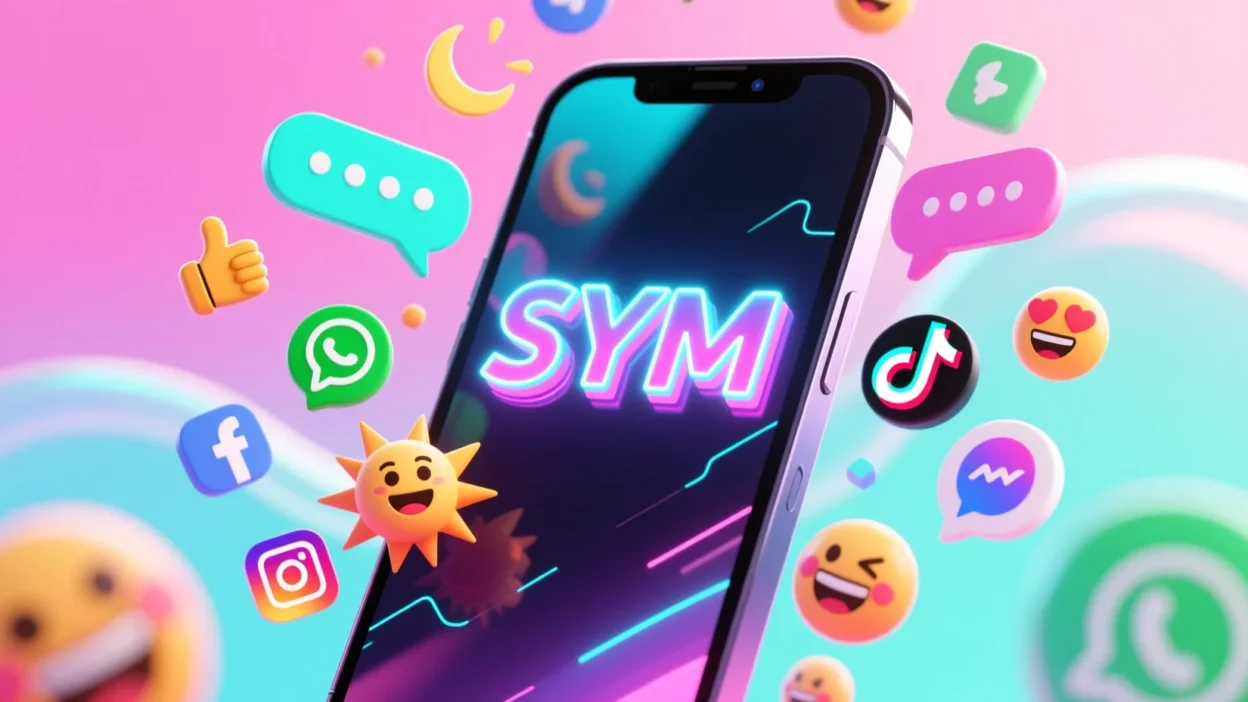
Have you ever been texting or scrolling through TikTok comments and suddenly saw SYM and paused, thinking, “What does that even mean?” It happens to everyone! At first, it seems like a random jumble of letters, but it’s actually a friendly, casual way to say goodbye. Understanding SYM slang meaning not only keeps you in the loop but also makes your online chats smoother and more relatable.
Quick Answer: SYM means “See You Mate.” It’s a casual and friendly way to say goodbye in texting, social media, or online chats.
🧠 What Does SYM Mean in Text?
SYM is short for “See You Mate.” It’s a casual farewell, perfect for texting friends, chatting on social media, or leaving a gaming session. The term “mate” gives it a friendly and informal vibe, commonly used in British and Australian English, but understood globally thanks to internet culture.
Example:
A: “Heading home now 😅”
B: “SYM 👋”
In short: SYM = See You Mate = Casual goodbye to friends.
Origin & Popularity:
- Origin: Primarily British/Australian slang, popularized online in text chats.
- Global Usage: With social media platforms like WhatsApp, TikTok, and Discord, SYM is now understood worldwide.
📱 Where Is SYM Commonly Used?
SYM is mostly seen in informal digital communication.
- 💬 Texting friends – casual goodbye
- 📱 WhatsApp & Messenger chats – social messages
- 🎮 Gaming chats – leaving or logging off
- 📸 Snapchat & TikTok DMs – friendly social media slang
- 📝 Informal emails to peers – only in relaxed, friendly settings
Tone: Casual, friendly, and social-media–friendly. Avoid using SYM in professional or formal conversations.
💬 Examples of SYM in Conversation
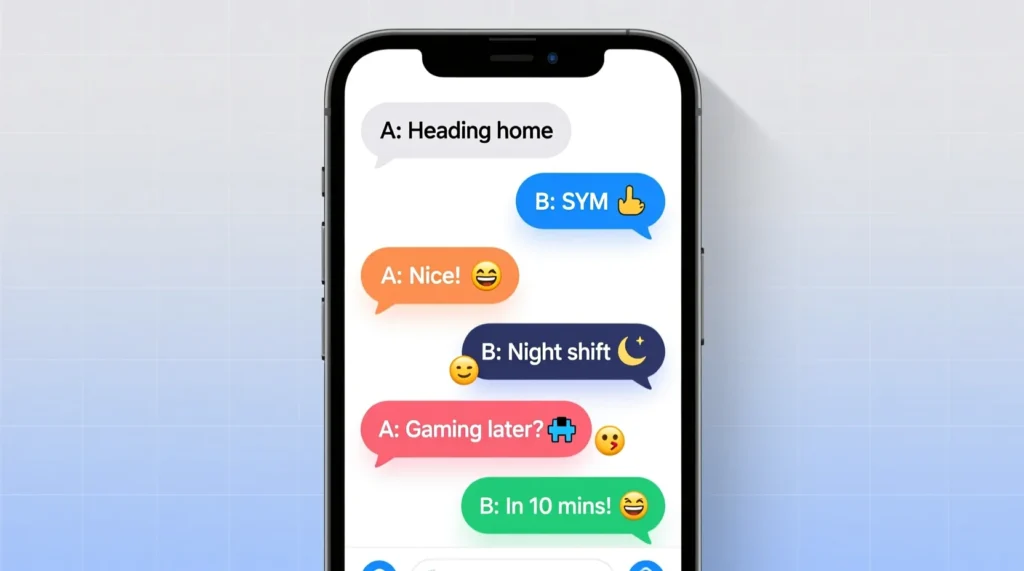
Here are some realistic chat examples showing SYM texting meaning in action:
- A: “Gotta go now 🏃♂️”
B: “SYM 😎” - A: “Leaving the party, catch you tomorrow?”
B: “SYM 👋” - A: “Logging off for the night 🌙”
B: “SYM 😁” - A: “Off to work, see you later”
B: “SYM, mate! ✌️” - A: “Talk soon!”
B: “SYM 👋” - A: “Leaving the game now, everyone”
B: “SYM GG! 🎮”
🕓 When to Use and When Not to Use SYM
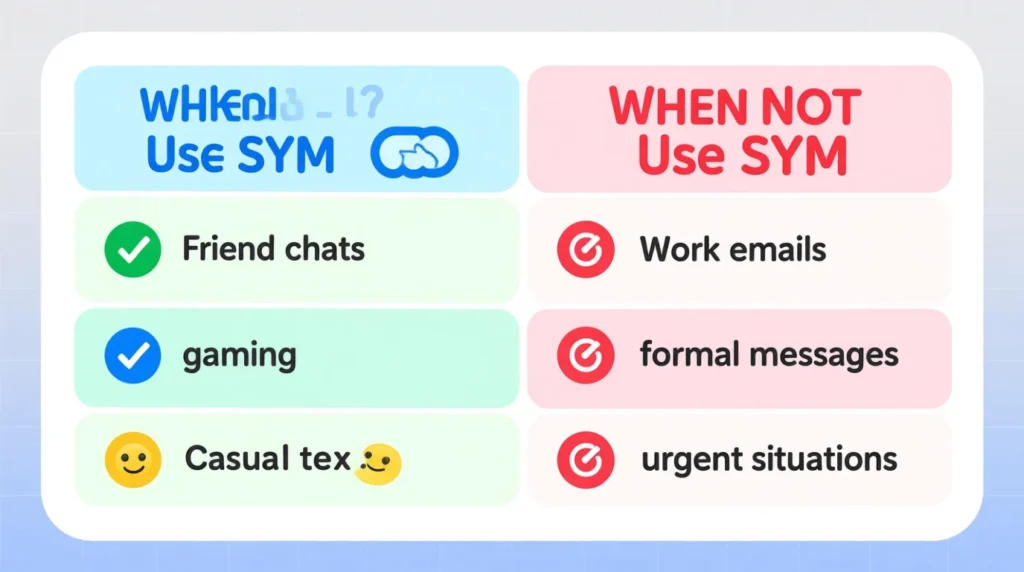
✅ When to Use:
- Friendly chats with peers or friends 👯♀️
- Casual social media messages 📱
- Gaming or online community conversations 🎮
- Texting classmates or casual colleagues in informal contexts 🏫
❌ When Not to Use:
- Professional emails or formal work chats 💼
- Serious, urgent, or sensitive situations ⚠️
- Messaging strangers who may not understand slang 🌍
| Context | Example Phrase | Why It Works |
| Friend Chat | “No rush, SYM 😄” | Casual & friendly |
| Gaming Chat | “GG everyone, SYM 🎮” | Informal, friendly |
| Work Chat | “Take your time.” | Polite & professional |
| “Please take your time to review this.” | Formal & clear |
🔄 Comparison With Similar Slang Words
| Slang | Meaning | When to Use |
| BRB | Be Right Back | Temporary pause in chat |
| TTYL | Talk To You Later | Casual goodbye |
| CU | See You | Short, friendly farewell |
| CYA | See Ya | Informal goodbye |
| GTG | Got To Go | Leaving conversation |
Tip: SYM is more friendly and regionally flavored (UK/Australia) compared to CU or CYA.
❓ FAQs About SYM
Q1: Is SYM formal or casual?
A: SYM is casual and friendly. Ideal for friends, gaming, and social media. Avoid in formal communication.
Q2: Where is SYM mostly used?
A: In texting, WhatsApp, Messenger, Discord, Snapchat, TikTok, and casual gaming chats.
Q3: Is SYM used globally?
A: Yes, but it originated in the UK and Australia. Social media has made it widely understood internationally.
Q4: SYM vs TTYL – What’s the difference?
A: SYM = “See You Mate” (friendly, informal goodbye)
TTYL = “Talk To You Later” (general, casual farewell)
Q5: Which emoji works best with SYM?
A: 👋, 😎, 🌙, or 🎮 depending on context and tone.
✅ Conclusion About SYM
SYM is a simple, friendly slang abbreviation meaning “See You Mate.” It’s perfect for casual texting, social media chats, and gaming conversations, but avoid using it in professional or formal settings.
Understanding SYM texting meaning, its regional origins, and its alternatives like TTYL or BRB ensures your online communication stays friendly, clear, and relatable.
Next time you see SYM, you’ll know exactly how to use it—confidently, naturally, and maybe even with an emoji or two!