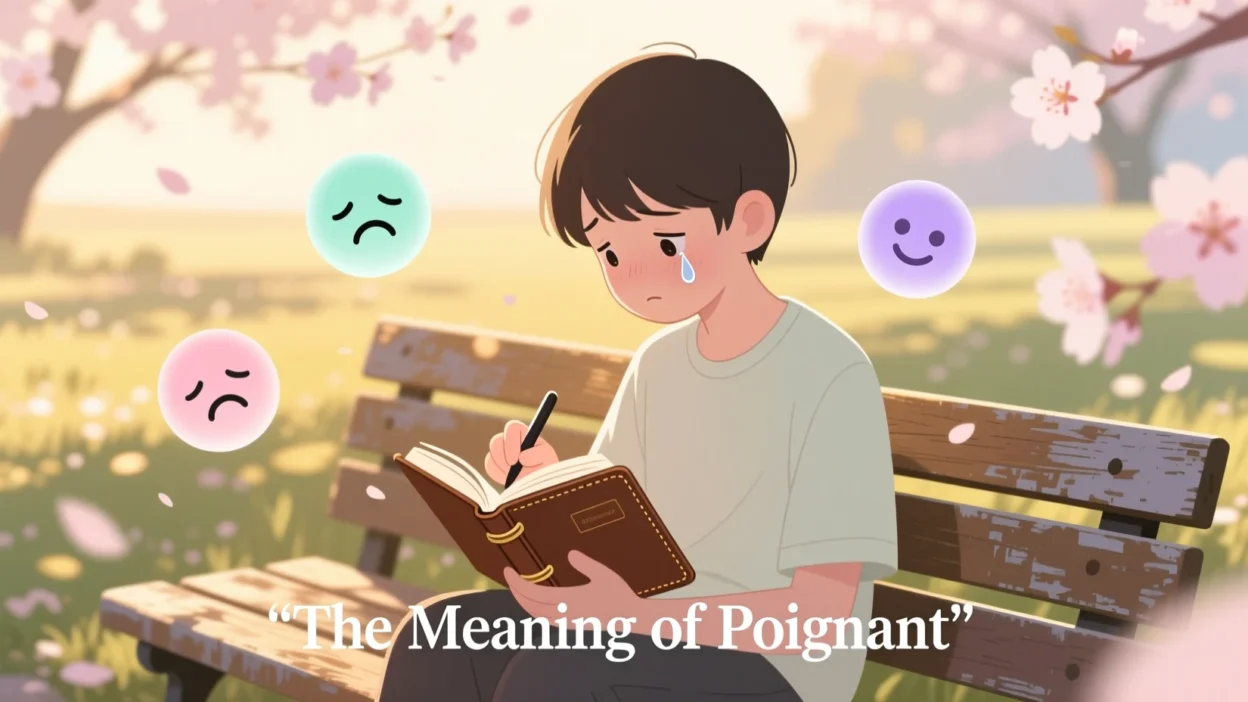
Scrolling through Instagram, I came across a caption that said, “The ending was so poignant 😢”, and I paused. I had no idea what “poignant” meant—was it slang? An emoji code? Turns out, it’s a real word, and it’s all about deep emotions.
Quick Answer:
Poignant means “emotionally touching or bittersweet.” It’s a thoughtful, heartfelt way of describing something that really moves you.
🧠 What Does Poignant Meaning in Text?
When people ask, “What does poignant mean in text?”, they want to know how to express deep feelings or bittersweet moments in words. It’s often used in texting, social media captions, or discussions about emotional movies, stories, or experiences.
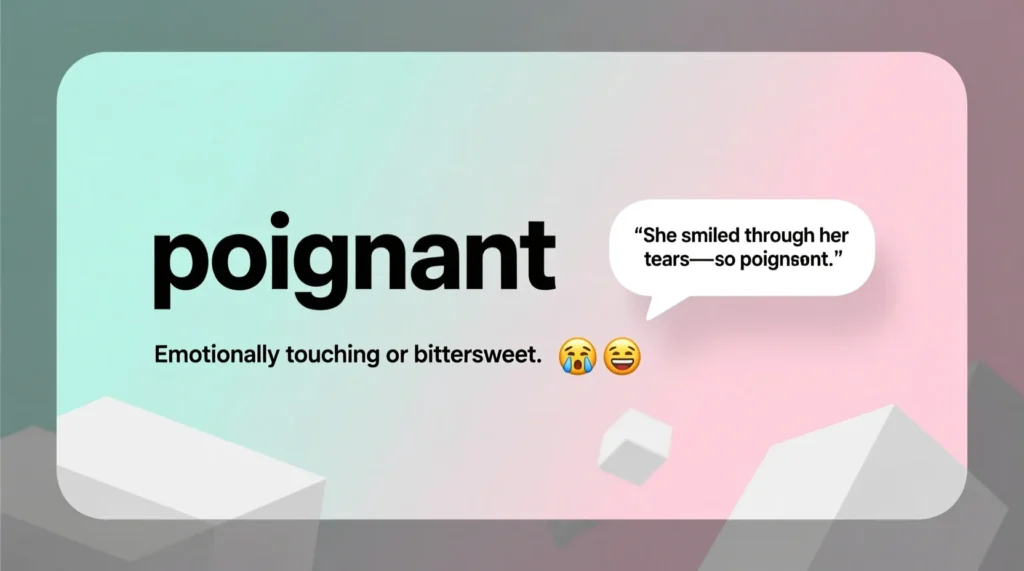
Example Sentence:
- “The movie’s ending was so poignant, I couldn’t stop thinking about it all night.”
In short: Poignant = emotionally touching = something that makes you feel deep emotion.
📱 Where Is Poignant Commonly Used?
You’ll see poignant in spaces where people share emotional or meaningful content:
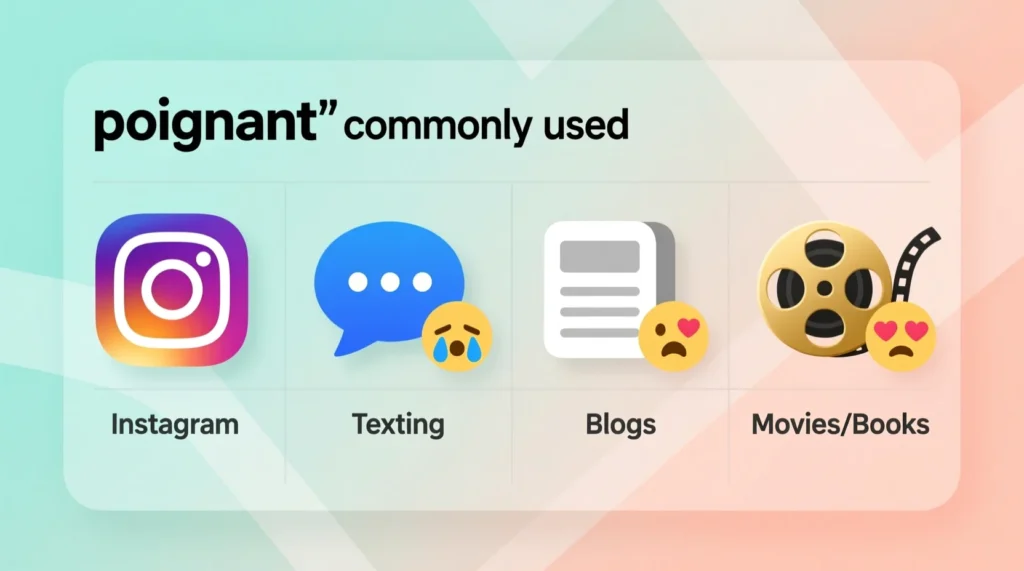
- 📸 Instagram captions — describing heartfelt or bittersweet moments.
- 💬 Texting friends — when sharing touching stories or movie reactions.
- 📝 Blogs and articles — to add emotional depth to reflections.
- 🎥 Movie or book discussions — highlighting sad, moving, or reflective scenes.
Tone: It’s reflective, emotional, and slightly formal—not casual slang.
💬 Examples of Poignant in Conversation
Here are short, realistic chat examples showing how to use poignant:
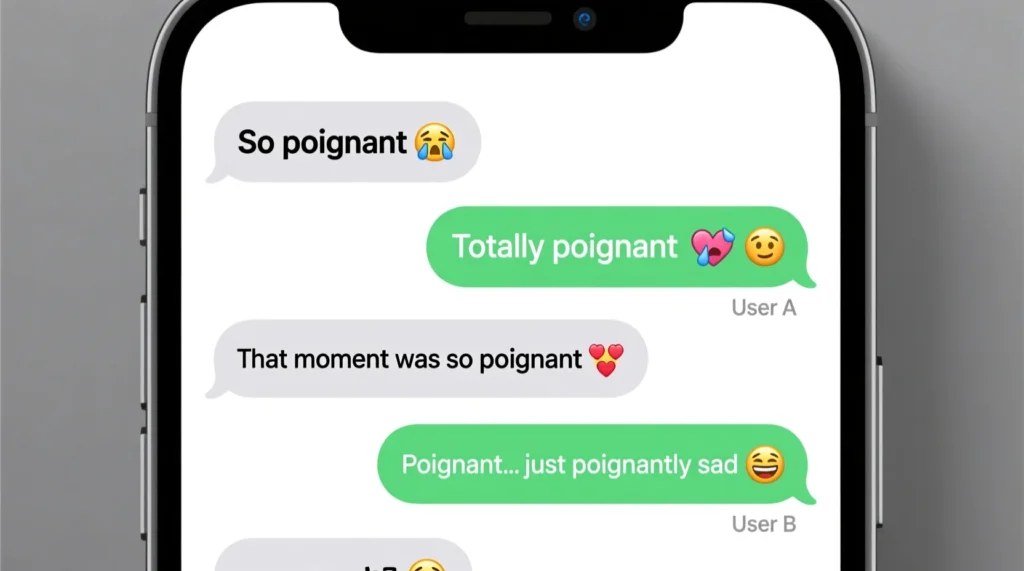
- Example
A: “Just finished that novel 😭”
B: “So poignant, right? 🥺”
- Example
A: “Did you watch that short film?”
B: “Yes! Totally poignant 😢”
- Example
A: “Your grandma’s photo is… beautiful.”
B: “Thanks, it’s really poignant 💔”
- Example
A: “Why so quiet?”
B: “Just reflecting… that speech was surprisingly poignant 🕊️”
- Example
A: “The ceremony felt emotional…”
B: “…poignant, exactly 😢”
🕓 When to Use and When Not to Use Poignant
✅ When to Use
- Sharing emotional reactions to stories, movies, or books
- Expressing deep feelings in texts, captions, or posts
- Describing meaningful or touching moments
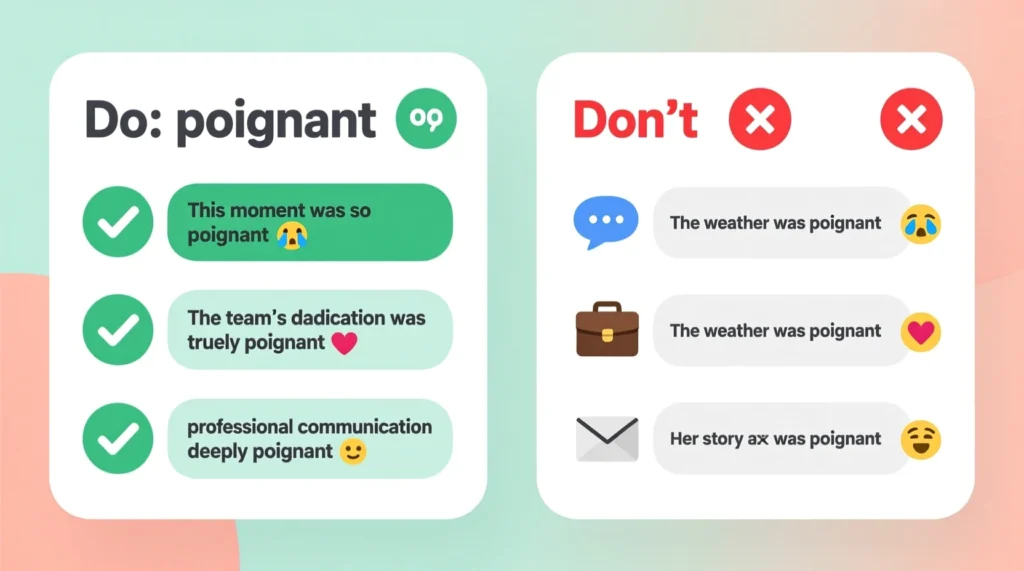
❌ When Not to Use
- Casual jokes or memes
- Work emails or urgent messages
- Professional instructions needing clarity
Comparison Table:
| Context | Example Phrase | Why It Works |
| Friend Chat | “That story was so poignant 😢” | Casual & emotional |
| Work Chat | “The presentation was very moving.” | Polite & professional |
| “The memorial service was particularly poignant.” | Formal & clear |
🔄 Similar Words or Alternatives
| Word/Slang | Meaning | When to Use |
| Touching | Emotionally moving | Texts, captions |
| Heartfelt | Sincere and deeply emotional | Messages, social media posts |
| Emotional | Strong feelings involved | Everyday chat, online posts |
| Moving | Affects emotions deeply | Articles, movie reviews |
| Bittersweet | Both happy and sad feelings | Captions, stories, reflective posts |
❓ FAQs About Poignant
Q1: Is poignant slang or formal?
It’s formal and descriptive, not casual slang. Perfect for texts, captions, and reflections.
Q2: Can I use poignant in texting?
Yes! Especially when sharing movies, stories, or moments that touch you.
Q3: Is poignant positive or negative?
It’s neutral-emotional—often bittersweet, nostalgic, or heartwarming.
Q4: Can I use poignant in social media captions?
Absolutely! Emojis like 😢, 🥺, 💔, or 🕊️ pair well with it.
Q5: Poignant vs touching — what’s the difference?
- Poignant: deeper, bittersweet, emotionally moving
- Touching: lighter, generally positive or moving
Q6: How do I use poignant in a short text?
- “Wow… so poignant 😢”
- “That ending 🥺 totally poignant.”
✅ Conclusion About Poignant
If you’ve been wondering “What does poignant meaning” really is, here’s the takeaway: it’s a powerful word that expresses deep emotion, nostalgia, or bittersweet feelings.
While not casual slang, it works perfectly in texts, social media captions, or reflective discussions.
Next time you want to show that something really hits the heart, remember: poignant = emotionally touching 💔.