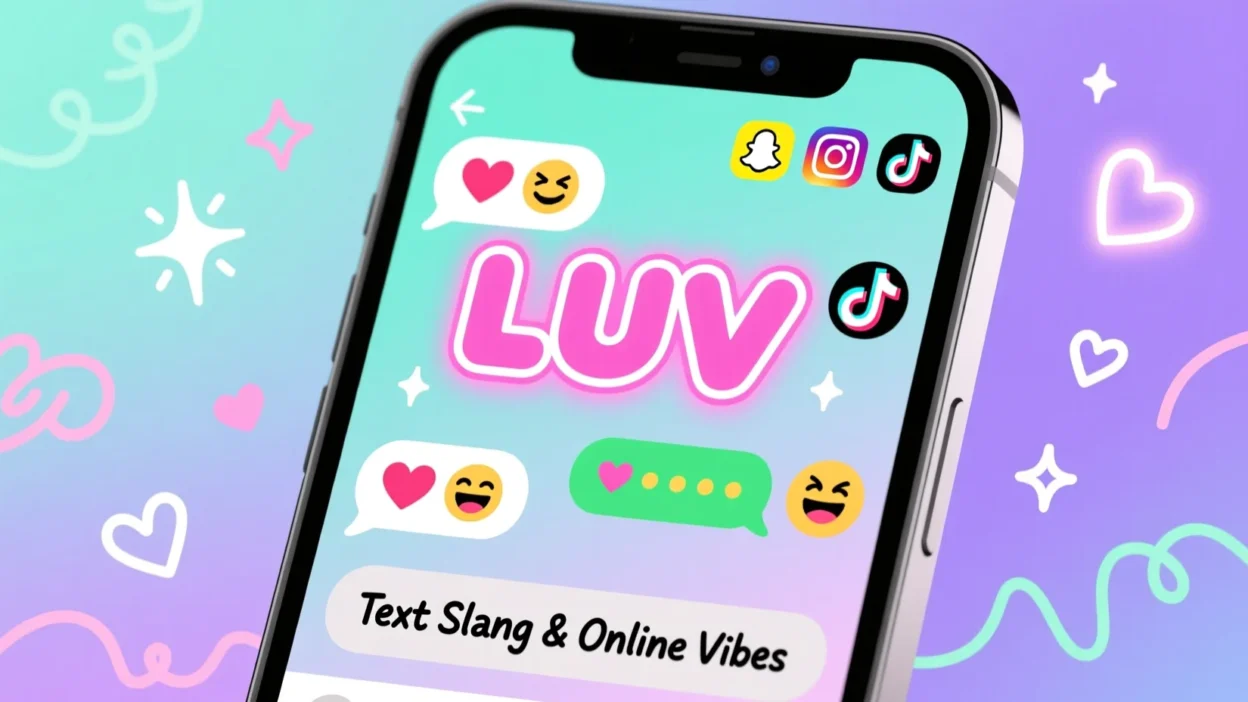
Scrolling through a chat, you spot “LUV” instead of “love,” and suddenly pause—“Wait, what does this mean?” If you’ve felt that moment of confusion, you’re not alone. Slang and texting abbreviations evolve fast, and knowing LUV meaning in text keeps you in the loop.
Whether it’s in DMs, social media comments, or casual texting, LUV is a friendly way to show affection, care, or even flirtation without writing the full word.
Quick Answer:
LUV means “Love.” It’s a casual, friendly, and sometimes flirty way to say “love” in texting, social media, or chat conversations.
🧠 What Does LUV Mean in Text and Social Media?
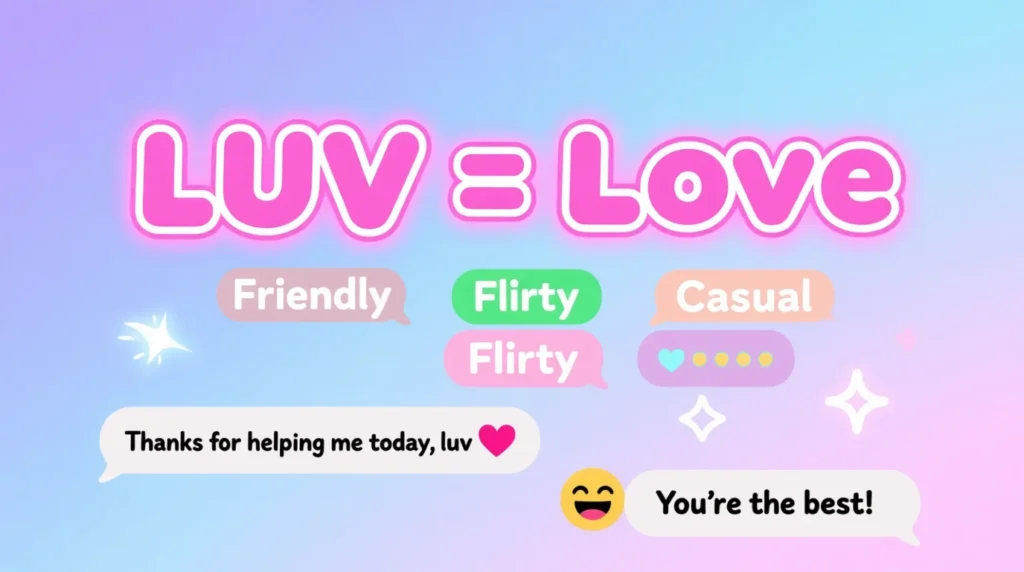
LUV is simply a shortened form of “love.” People use it to express affection, friendship, or endearment without typing the full word. It’s very casual, and often used in texting, Instagram comments, TikTok replies, and Snapchat chats.
Example:
- “Thanks for always being there, luv 😘”
Tone Variations:
- Friendly: With friends or family — “luv, you’re the best 😄”
- Flirty: With someone you like — “Miss you, luv 😍”
- Casual: General warm messages — “No worries, luv 💖”
In short: LUV = Love = a casual, affectionate, and sometimes flirty way to show care.
📱 Where Is LUV Commonly Used?
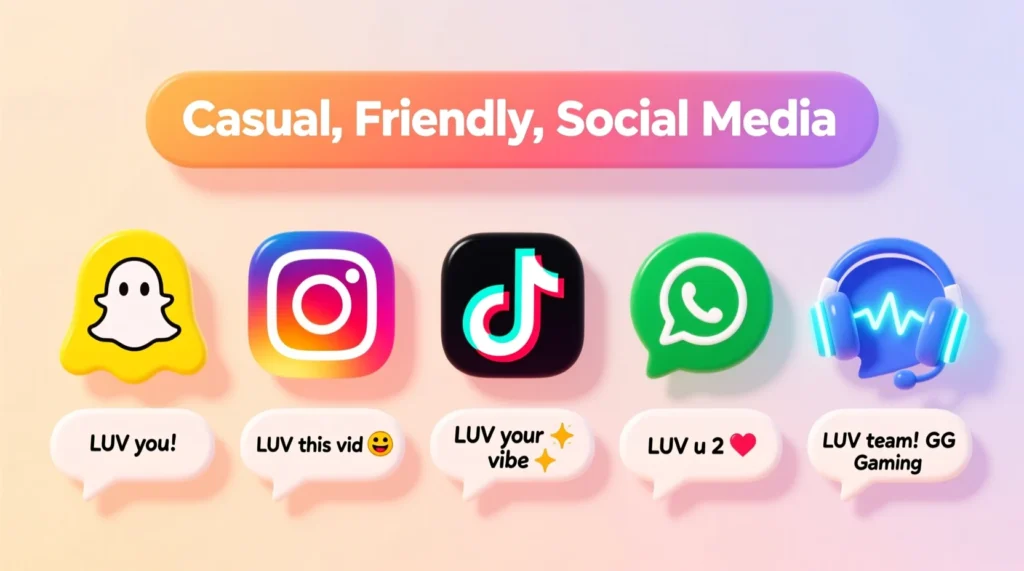
LUV slang meaning appears mostly in casual and social media contexts:
- Snapchat 📸 — sending quick DMs to friends or crushes
- Instagram 💬 — captions, comments, and replies
- TikTok 🎵 — comment sections or duet replies
- WhatsApp 📱 — everyday chats with friends or family
- Gaming chats 🎮 — friendly banter with teammates
Tone: Always casual, friendly, or flirty — never professional or formal.
💬 Examples of LUV in Conversation
Here are some realistic examples showing LUV text abbreviation in action:
- A: “Thanks for helping me today!”
B: “No problem, luv ❤️” - A: “Can’t wait to see you later 😄”
B: “Same here, luv 😘” - A: “Your outfit looks amazing today!”
B: “Aww, luv, thanks 😍” - A: “I just finished the project!”
B: “Congrats, luv! 🎉” - A: “Feeling tired after work 😩”
B: “Hang in there, luv 💪” - A: “Goodnight, see you tomorrow!”
B: “Night, luv 😴”
🕓 When to Use and When Not to Use LUV
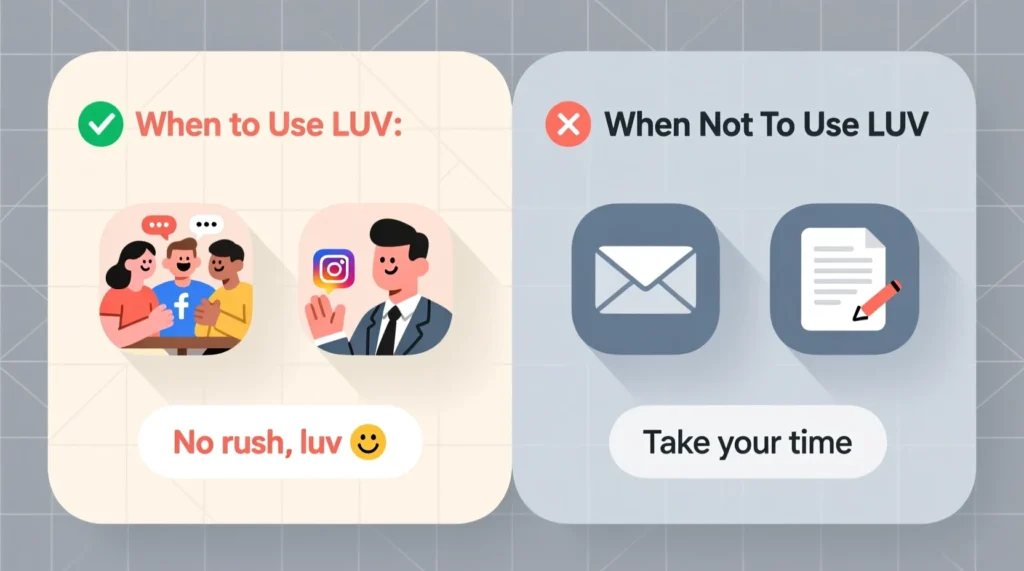
Knowing when to drop LUV in texting helps avoid awkward moments.
✅ When to Use
- Texting friends or family
- Social media comments or DMs
- Flirty messages with someone you know well
- Showing appreciation or encouragement
❌ When Not to Use
- Work emails or professional chats
- Serious or urgent discussions
- Conversations with strangers
- Legal or official communications
Comparison Table:
| Context | Example Phrase | Why It Works |
| Friend Chat | “No rush, luv 😄” | Casual & friendly |
| Work Chat | “Take your time.” | Polite & professional |
| “Please take your time to review this.” | Formal & clear |
🔄 Similar Slang Words or Alternatives
If you like LUV, here are some similar texting slang words:
| Slang | Meaning | When to Use |
| <3 | Heart / love | Texts, social media, casual chats |
| XOXO | Hugs & kisses | Friends, romantic partners |
| LMAO | Laughing my ass off | Funny chats, casual conversation |
| BFF | Best friend forever | Messages to close friends |
| YOLO | You only live once | Playful or adventurous contexts |
❓ FAQs About LUV
1. Is LUV the same as love?
Yes! LUV meaning is just a casual, shortened version of the word love, commonly used in texting and social media.
2. Can LUV be flirty?
Absolutely. Depending on context, LUV in texting can be friendly, platonic, or subtly flirty.
3. Where did LUV originate?
It started as text slang in early SMS culture to save space and typing effort. Over time, it became popular on social media platforms like Instagram and TikTok.
4. How do you respond to LUV?
Simple replies like “luv you too 😘” or “thanks, luv ❤️” work perfectly depending on context.
5. Is LUV appropriate in professional emails?
No, it’s informal and should not be used in professional or official communications.
6. How is LUV different from LOVE?
LOVE is formal and versatile. LUV is casual, friendly, or flirty, and mostly used in texting or social media.
Conclusion About LUV
In short, LUV is a fun, friendly, and versatile way to express love, care, or affection in casual chats, texting, and social media. It can be friendly, casual, or flirty depending on context, but should be avoided in formal or professional settings.
Understanding LUV meaning in text and its tone ensures your messages feel warm, natural, and relatable.
Next time you see LUV in a comment or DM, you’ll know exactly how to respond—maybe even adding your own 😘 for extra charm!