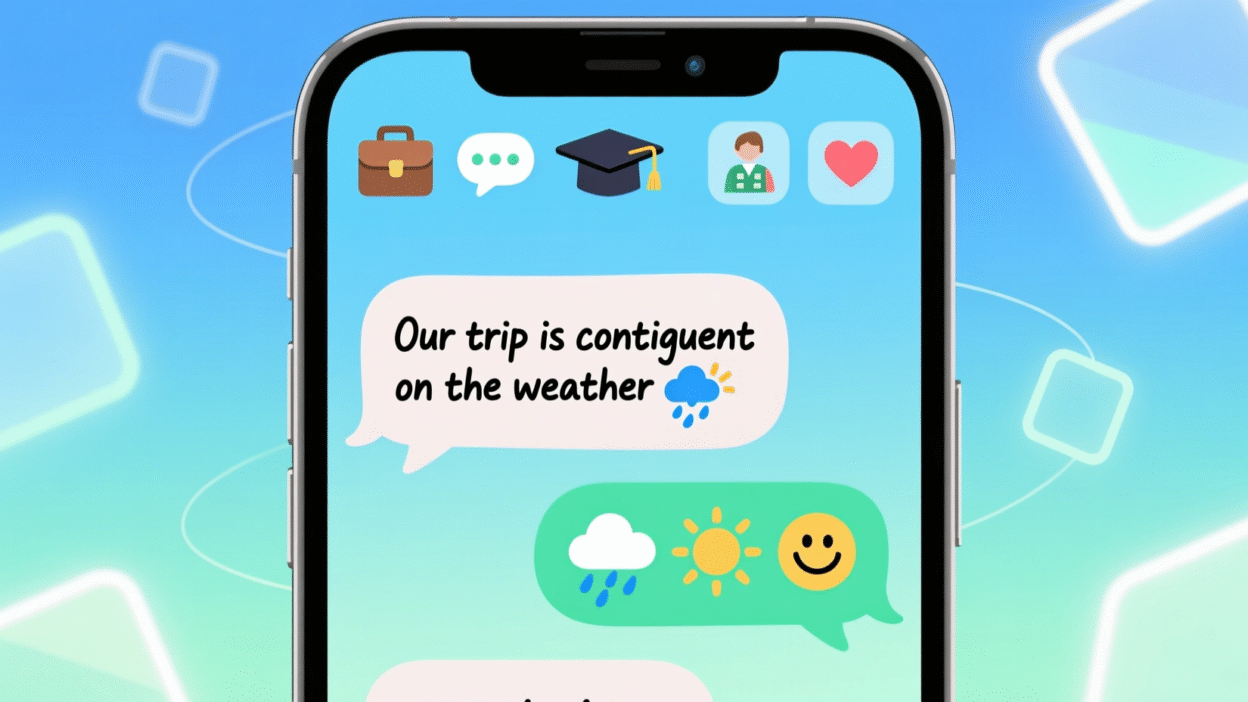
The first time I saw a text saying, “Our trip is contingent on the weather,” I froze. Was this a new slang I missed? A secret code? Or just someone trying to sound fancy?
After a little research, I realized “contingent” isn’t slang, but a formal or semi-formal word that people often use in texting and social media to clearly explain that something depends on a condition.
Quick Answer:
Contingent means “dependent on something else happening.” It’s a neutral-to-formal tone way to say a plan or decision will happen only if a certain condition is met.
🧠 What Does Contingent Mean in Text?
When you search for “contingent meaning in text” or “contingent meaning in chat”, it’s important to know that the meaning doesn’t change. In texting, contingent is used to express conditional situations clearly.
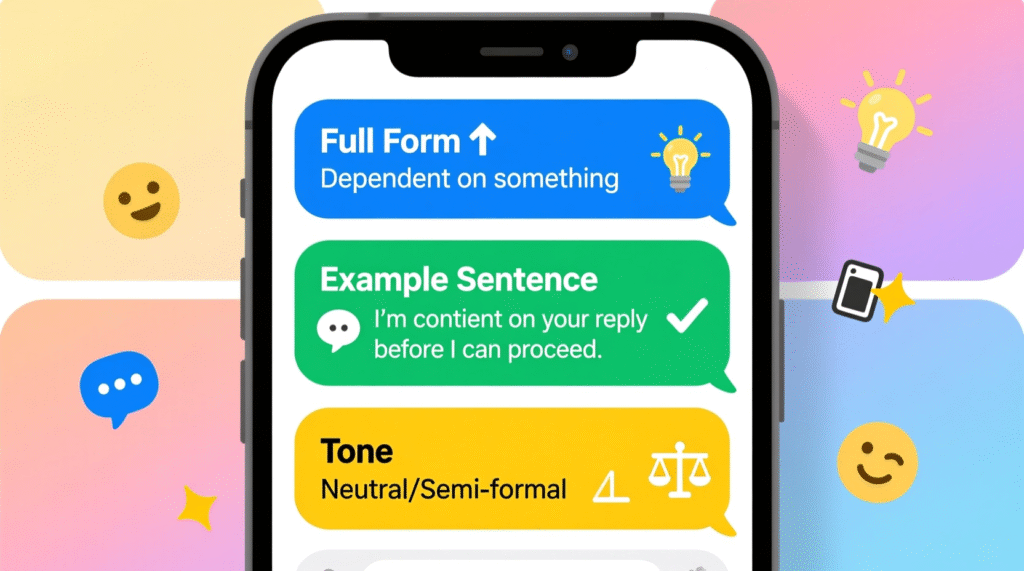
- Part of speech: Adjective
- Origin: Latin contingere meaning “to touch, to befall”
- Tone: Neutral → Semi-formal → Professional
Real-Life Example:
“Our weekend hike is contingent on whether it stops raining 🌧️.”
In short:
Contingent = dependent on = conditional = will only happen if something else occurs.
📱 Where Is Contingent Commonly Used?
Even though it’s formal, contingent has found its way into casual texting, work chats, emails, and social media.
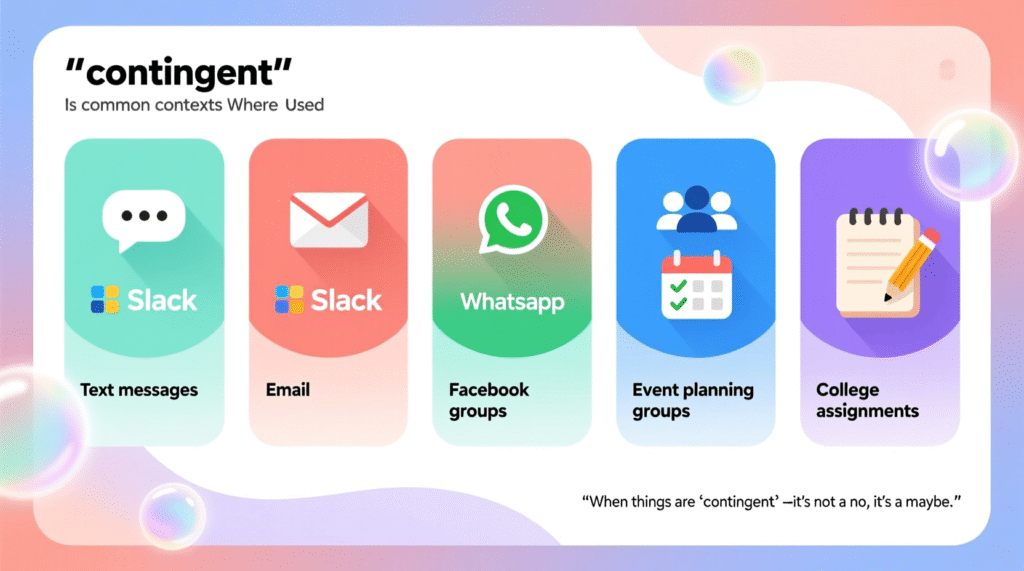
Common Places You’ll See It:
- 💬 Text messages – explaining plans
- 🏢 Slack / Teams / Work chat – scheduling or deadlines
- 📧 Emails – semi-formal professional tone
- 📘 Facebook / WhatsApp groups – family, friends, or school projects
- 🎓 College planning / assignments – dependent tasks
- 📅 Event planning / appointments – conditional confirmations
Tone & Usage:
- ✔ Neutral
- ✔ Semi-formal
- ✔ Professional / Academic
- ✖ Not flirty
- ✖ Not Gen-Z slang
Tip: Think of it as a formal-friendly “maybe” — but smarter.
💬 Examples of Contingent in Conversation
Here are 10 realistic texting examples, covering different tones and contexts:
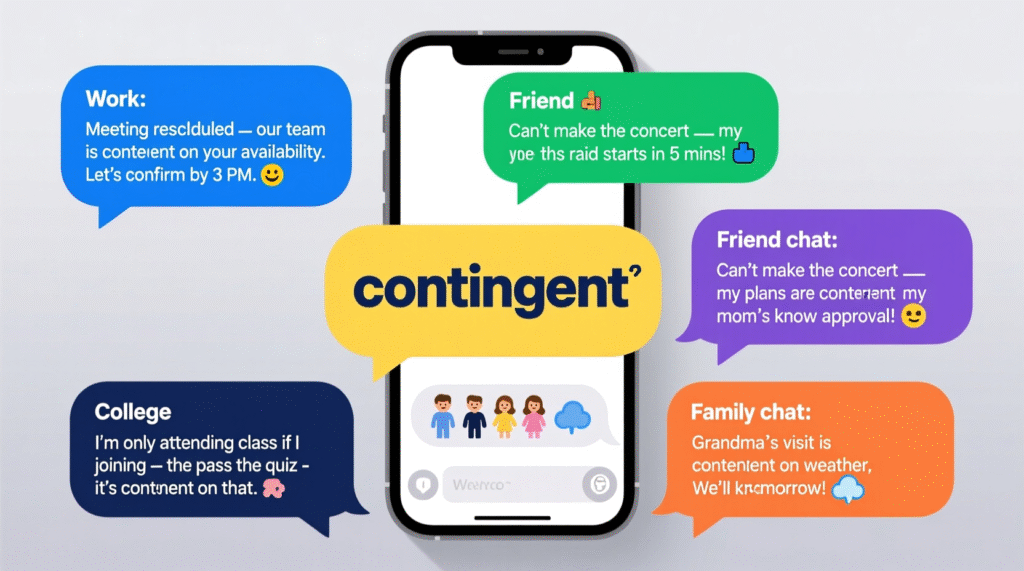
1. Casual Friend Chat:
A: you free for coffee? ☕
B: contingent on my meeting ending early 😅
2. Work Chat:
A: can we launch the report tomorrow?
B: contingent on the manager’s approval ✅
3. Event Planning:
A: is the picnic happening?
B: contingent on the weather 🌤️
4. College / Academic:
A: will you attend the seminar?
B: contingent on my assignment deadline 😭
5. Family / WhatsApp Group:
A: can we go to the beach this weekend?
B: contingent on dad saying yes 😂
6. Misunderstanding Example (wrong usage):
A: u coming?
B: contingent 😳
Why wrong: Too vague without context
7. Corrected Usage:
A: u coming?
B: contingent on finishing homework first 😅
8. Gaming Chat:
A: join the raid tonight?
B: contingent on my internet staying up ⚡
9. Romantic / Casual Flirt:
A: want to watch a movie tonight? 🎬
B: contingent on if u bring snacks 😏
10. Professional / Semi-Formal:
A: will the report be ready by Friday?
B: contingent on receiving the final data 📊
🕓 When to Use and When Not to Use Contingent
✅ When to Use
- Explaining conditional plans
- Scheduling work or meetings
- Semi-formal texting with colleagues or teachers
- Giving precise answers instead of vague “maybe”
- Event planning or assignments
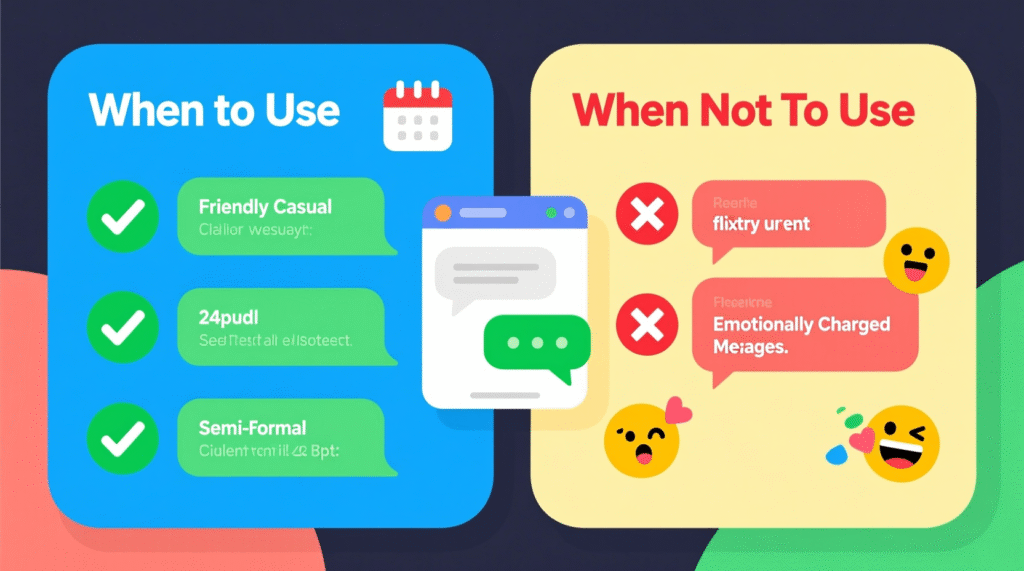
❌ When Not to Use
- Flirty conversations (sounds too formal)
- Emotional messages
- Urgent or emergency communication
- Talking to young children or casual slang-heavy audiences
Comparison Table
| Context | Example Phrase | Why It Works |
| Friend Chat | “It’s contingent on my shift ending 😅” | Casual but clear |
| Work Chat | “Launch date is contingent on approval.” | Professional & precise |
| “Timeline is contingent on receiving files.” | Formal & clear | |
| Event Planning | “Venue availability is contingent on deposit.” | Shows dependency clearly |
| College / Academic | “Attendance is contingent on completing the assignment.” | Academic-friendly |
🔄 Similar Words / Alternatives
Here’s a table of contingent synonyms and easier alternatives, perfect for texting:
| Word/Phrase | Meaning | When to Use |
| Depends | Based on something | Everyday texting |
| Only if | Conditional requirement | Casual emphasis |
| Based on | Influenced by | Work or school |
| Depending on | Conditional situation | General use |
| Conditional | Requires specific factors | Formal or academic |
| If that happens | Depends on another event | Very casual |
❓ FAQs About Contingent
1. Is “contingent” slang?
No. It’s standard English, but commonly used in texting and work messages.
2. What does “contingent” mean in texting?
It means dependent on a condition, i.e., something happens only if another thing happens first.
3. Can it be used casually?
Yes, but provide context. Without context, it can feel too formal or confusing.
4. What’s the simplest alternative?
Depends is the easiest everyday alternative.
5. Is it flirty?
Not really. It’s mostly neutral or formal. Using it in romance can sound awkward.
6. Does it mean “maybe”?
Not exactly. Contingent explains why it might happen, unlike the vague “maybe.”
7. Where else is it used?
Real estate, law, and business contexts also use “contingent,” but the meaning is still conditional/dependent.
📝 Conclusion About Contingent
Contingent is a clear, precise word to express dependency or conditional situations. While it’s not slang, it is used widely in texting, work messages, and social media to convey “it depends” in a smart way.
✅ Use it for clarity and professionalism
✅ Use “depends” for casual texts
❌ Avoid using it in flirty or emotional messagesBy understanding what contingent means in texting, you can sound polished, clear, and intentional in your messages — without confusing anyone.