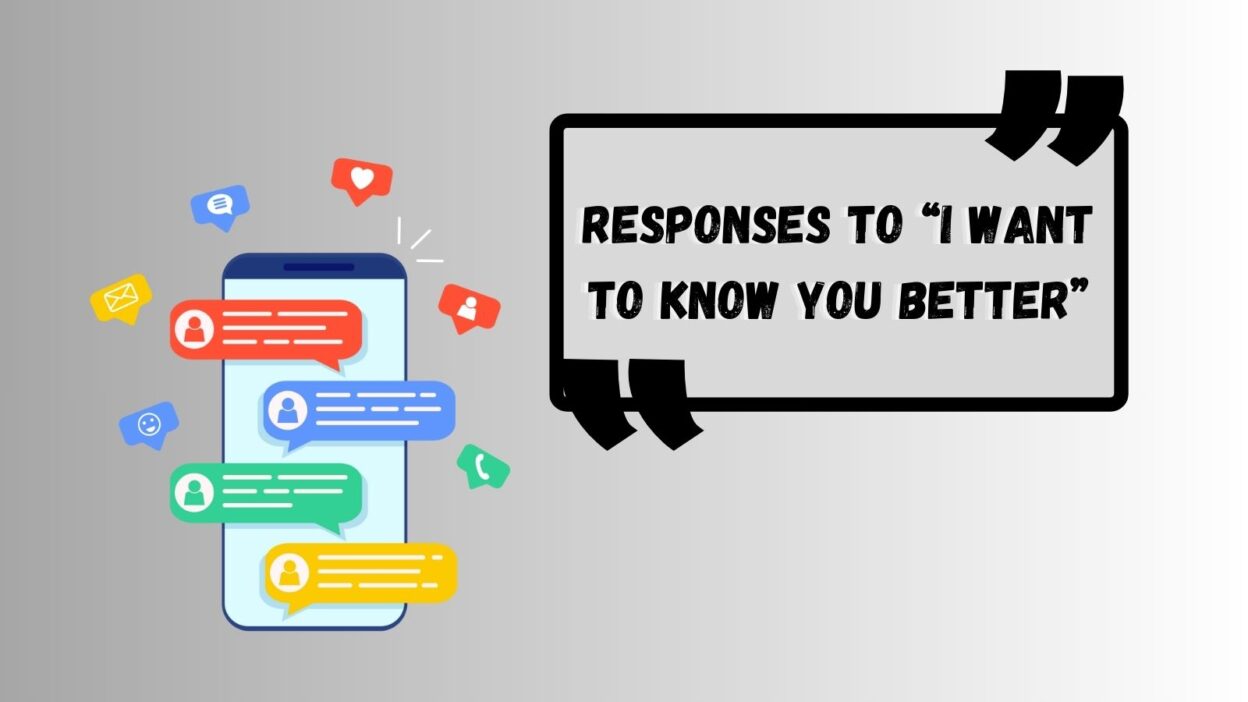
When someone says “I want to know you better,” it often carries warmth, curiosity, and emotional openness. It can feel flattering, slightly vulnerable, and sometimes even a little overwhelming—especially if you’re unsure how to respond in a way that feels honest, kind, and emotionally aligned.
This article is designed to help you reply with thoughtfulness, care, and clarity, whether the moment is romantic, friendly, or somewhere in between. Drawing from real-life communication experience, emotional intelligence, and relationship psychology, these responses are crafted to sound natural, human, and sincere—not scripted or robotic.
1. “I’d really like that too.”
This response shows mutual interest and emotional openness without overcommitting.
Best Use:
Use this when you genuinely feel comfortable exploring a deeper connection.
Not to Use:
Avoid if you feel unsure or pressured.
Other Ways to Say:
- “That sounds really nice.”
- “I’m open to that.”
Example:
“I’d really like that too. It feels good to connect more deeply.”
2. “I appreciate you saying that.”
This acknowledges their vulnerability with gratitude and respect.
Best Use:
Perfect when you want to respond warmly but cautiously.
Not to Use:
Don’t use alone if you want to clearly express interest—add a follow-up.
Other Ways to Say:
- “That means a lot to hear.”
- “Thank you for being open.”
Example:
“I appreciate you saying that. It shows honesty.”
3. “I’m open to getting to know you better.”
A balanced response that communicates openness without pressure.
Best Use:
Great for early-stage connections.
Not to Use:
Avoid if you already feel emotionally invested—it may sound distant.
Other Ways to Say:
- “I’m comfortable exploring that.”
- “I’m open to learning more about you.”
Example:
“I’m open to getting to know you better, at a natural pace.”
4. “That feels really thoughtful of you.”
This validates their intention and emotional effort.
Best Use:
When you want to recognize emotional maturity.
Not to Use:
Avoid if you want a more direct romantic tone.
Other Ways to Say:
- “That’s really kind of you.”
- “That means something to me.”
Example:
“That feels really thoughtful of you, and I appreciate it.”
5. “I enjoy meaningful conversations too.”
Signals shared values around emotional depth and communication.
Best Use:
Ideal for people who value deeper connections.
Not to Use:
Don’t use if the situation is purely casual.
Other Ways to Say:
- “I like genuine connections.”
- “Depth matters to me as well.”
Example:
“I enjoy meaningful conversations too—it’s how real bonds form.”
6. “I’m glad you feel comfortable saying that.”
Creates emotional safety and reassurance.
Best Use:
Excellent when someone is being vulnerable.
Not to Use:
Avoid if it feels too formal for the moment.
Other Ways to Say:
- “I’m glad you shared that.”
- “That took honesty.”
Example:
“I’m glad you feel comfortable saying that—it matters.”
7. “What would you like to know?”
Invites dialogue and shows active engagement.
Best Use:
When you’re genuinely open to conversation.
Not to Use:
Avoid if you’re emotionally unavailable.
Other Ways to Say:
- “Where would you like to start?”
- “I’m open—ask me anything.”
Example:
“What would you like to know? I’m happy to share.”
8. “I like taking things step by step.”
Sets healthy boundaries while staying warm.
Best Use:
When pacing matters to you.
Not to Use:
Avoid if they’re looking for clear enthusiasm.
Other Ways to Say:
- “I prefer things to grow naturally.”
- “I value a steady pace.”
Example:
“I like taking things step by step—it helps me feel grounded.”
9. “That makes me feel valued.”
Expresses emotional impact clearly.
Best Use:
When you want to reinforce positive behavior.
Not to Use:
Avoid if you don’t feel emotionally affected.
Other Ways to Say:
- “That means a lot to me.”
- “I feel appreciated hearing that.”
Example:
“That makes me feel valued, honestly.”
10. “I’m enjoying getting to know you so far.”
Keeps things present-focused and sincere.
Best Use:
Perfect for early dating or new friendships.
Not to Use:
Avoid if the connection feels stagnant.
Other Ways to Say:
- “I’ve liked our conversations.”
- “I enjoy our time together.”
Example:
“I’m enjoying getting to know you so far—it feels natural.”
11. “I think real connections take time.”
Shows emotional maturity and patience.
Best Use:
When you want to slow things gently.
Not to Use:
Avoid if speed and excitement are expected.
Other Ways to Say:
- “I value gradual connections.”
- “Depth grows over time.”
Example:
“I think real connections take time, and I respect that.”
12. “I’m curious about you too.”
Mutual curiosity without intensity.
Best Use:
When interest is equal but still developing.
Not to Use:
Avoid if you want stronger emotional language.
Other Ways to Say:
- “I’d like to learn more about you as well.”
Example:
“I’m curious about you too—it feels mutual.”
13. “That feels like a genuine intention.”
Acknowledges sincerity.
Best Use:
When you sense honesty.
Not to Use:
Avoid if trust hasn’t formed yet.
Other Ways to Say:
- “That feels sincere.”
- “I respect that honesty.”
Example:
“That feels like a genuine intention, and I value that.”
14. “I value emotional honesty.”
Communicates your core values.
Best Use:
When emotional depth matters to you.
Not to Use:
Avoid if the moment is lighthearted.
Other Ways to Say:
- “Honesty matters to me.”
Example:
“I value emotional honesty, so I appreciate you saying that.”
15. “I’m comfortable opening up gradually.”
Sets a clear emotional pace.
Best Use:
When you want safety and trust.
Not to Use:
Avoid if they want immediacy.
Other Ways to Say:
- “I open up with time.”
Example:
“I’m comfortable opening up gradually—it feels right to me.”
16. “That’s something I don’t take lightly.”
Shows depth and seriousness.
Best Use:
When connection matters deeply.
Not to Use:
Avoid in casual contexts.
Other Ways to Say:
- “That means a lot to me.”
Example:
“That’s something I don’t take lightly, honestly.”
17. “I’m glad we’re having this conversation.”
Affirms the moment.
Best Use:
When emotional dialogue is unfolding.
Not to Use:
Avoid if you feel rushed.
Other Ways to Say:
- “This feels important.”
Example:
“I’m glad we’re having this conversation—it matters.”
18. “I feel comfortable with you.”
Expresses trust and safety.
Best Use:
When emotional rapport is strong.
Not to Use:
Avoid if it’s too soon.
Other Ways to Say:
- “I feel at ease around you.”
Example:
“I feel comfortable with you, and that says a lot.”
19. “I like where this is going.”
Positive and forward-looking.
Best Use:
When things feel aligned.
Not to Use:
Avoid if unsure.
Other Ways to Say:
- “This feels promising.”
Example:
“I like where this is going—it feels natural.”
20. “Let’s see where this leads.”
Open-ended and gentle.
Best Use:
When you want flexibility.
Not to Use:
Avoid if clarity is required.
Other Ways to Say:
- “Let’s take it one step at a time.”
Example:
“Let’s see where this leads, naturally.”
21. “I value genuine effort.”
Recognizes emotional initiative.
Best Use:
When effort matters to you.
Not to Use:
Avoid if it sounds evaluative.
Other Ways to Say:
- “I notice sincerity.”
Example:
“I value genuine effort, and this feels sincere.”
22. “That feels reassuring to hear.”
Highlights emotional impact.
Best Use:
When reassurance matters.
Not to Use:
Avoid if neutrality is needed.
Other Ways to Say:
- “That gives me comfort.”
Example:
“That feels reassuring to hear, honestly.”
23. “I appreciate meaningful intentions.”
Emotionally intelligent and calm.
Best Use:
When intentions matter more than words.
Not to Use:
Avoid if too formal.
Other Ways to Say:
- “Intentions matter to me.”
Example:
“I appreciate meaningful intentions like that.”
24. “I’m open, as long as we’re honest.”
Sets a boundary with warmth.
Best Use:
When honesty is non-negotiable.
Not to Use:
Avoid if it sounds conditional.
Other Ways to Say:
- “Honesty is important to me.”
Example:
“I’m open, as long as we’re honest with each other.”
25. “I think this could be something meaningful.”
Deep, intentional, and sincere.
Best Use:
When emotional alignment is strong.
Not to Use:
Avoid if feelings are uncertain.
Other Ways to Say:
- “This feels meaningful to me.”
Example:
“I think this could be something meaningful if we nurture it.”
Conclusion
Responding to “I want to know you better” is about more than choosing the right words—it’s about emotional awareness, honesty, and intention. From personal experience and years of observing real human communication, the most powerful responses are the ones that feel true, not perfect.
Whether you lean toward openness, caution, or gentle curiosity, these responses help you communicate with warmth, care, and confidence—while honoring your emotional boundaries.
Editor’s Choices: Top 10 Thoughtful Responses
- “I’d really like that too.” – Warm and mutual
- “I appreciate you saying that.” – Emotionally respectful
- “I’m open to getting to know you better.” – Balanced and safe
- “What would you like to know?” – Inviting and engaging
- “I like taking things step by step.” – Healthy pacing
- “I’m enjoying getting to know you so far.” – Present-focused
- “I value emotional honesty.” – Values-driven
- “I feel comfortable with you.” – Trust-building
- “Let’s see where this leads.” – Open-ended
- “I think this could be something meaningful.” – Deep and intentional